Stainless steel tank expert. Let’s work together Contact Us
Stainless steel tank expert. Let’s work together Contact Us

The application of stainless steel storage tanks in the milk industry not only solves the hygiene and corrosion problems of traditional equipment, but also promotes the development of the industry in the direction of efficiency, intelligence and environmental protection through technological innovation.
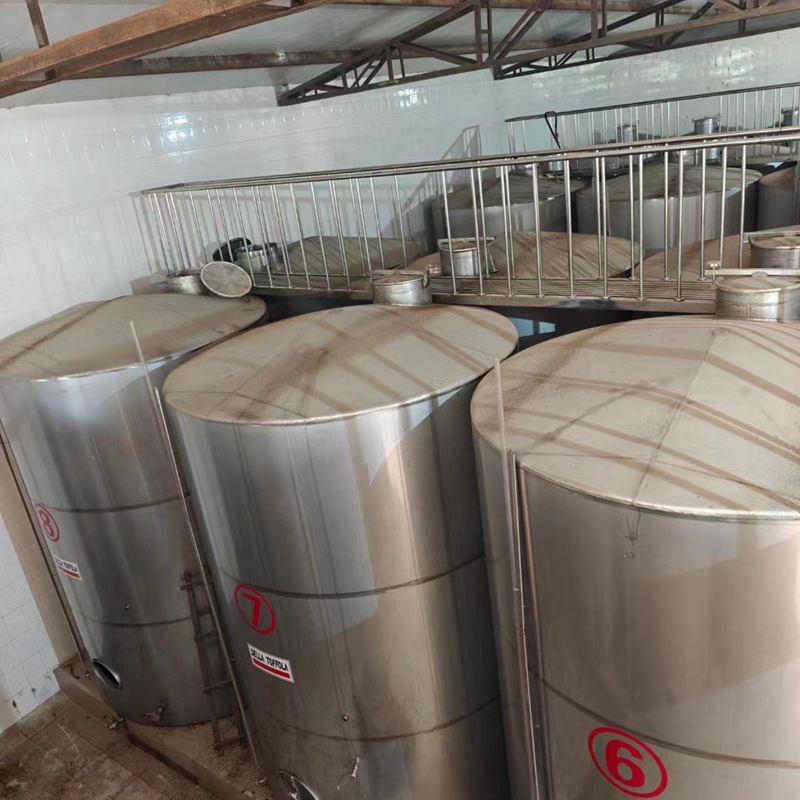
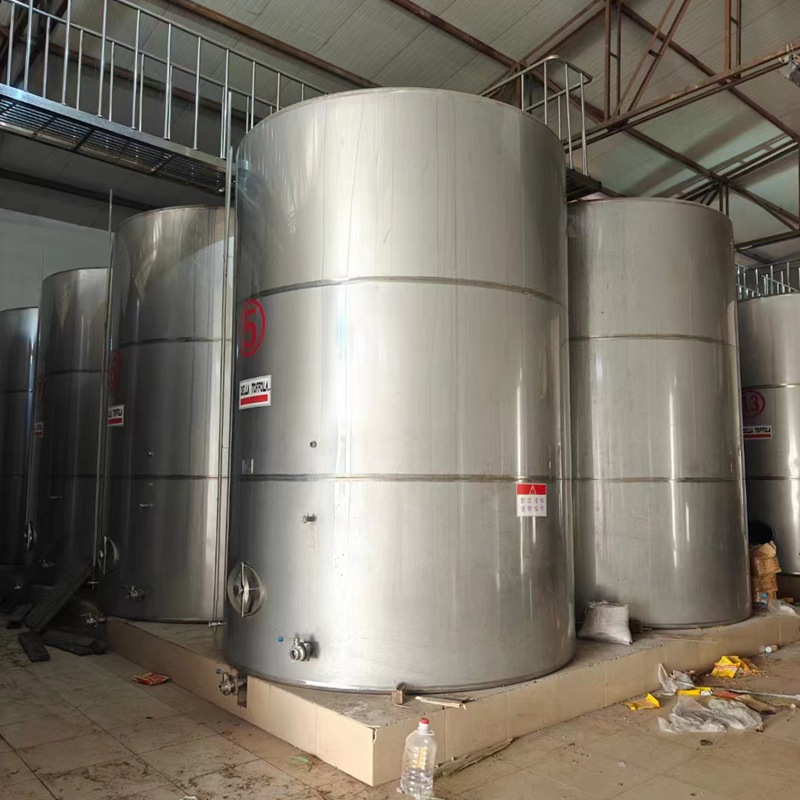
Dairy processing plants need to set up buffer tanks between UHT sterilization and filling processes to cope with sudden downtime or capacity fluctuations on the packaging line. Traditional carbon steel storage tanks cause the iron ion content in milk to exceed the standard due to corrosion problems, affecting the flavor of the product.
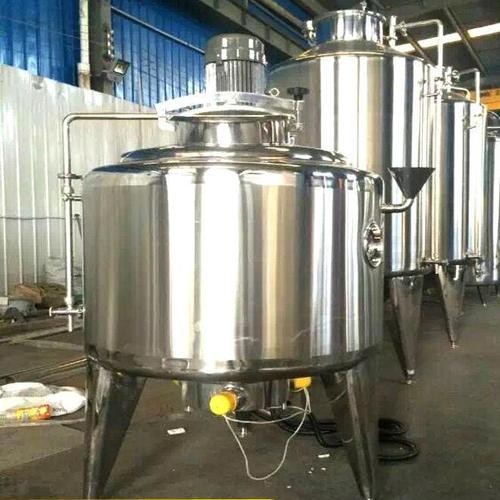
It adopts a 316L stainless steel intermediate buffer tank with a volume of 3000 liters, the inner wall is electropolished, and the surface roughness is Ra≤0.4μm. The tank is equipped with an anchor agitator with adjustable speed (0-30 rpm) to prevent milk fat delamination. The insulation layer is designed with a double-layer stainless steel jacket, filled with mineral wool in the middle, and has a thermal conductivity of ≤ 0.035 W/(m·K).
Implementation effect:
Corrosion control: The corrosion resistance of 316L stainless steel is 3 times higher than that of 304 stainless steel, the service life of the tank is extended to more than 15 years, and the maintenance cost is reduced by 60%.
Stable quality: The mixing system makes the milk fat uniformity up to 98.5%, avoiding the problem of fat floating after UHT sterilization. The temperature control system ± 0.3°C accuracy, ensuring stable milk storage at 2-4°C.
Cleaning efficiency: The CIP cleaning system adopts a four-stage process (pre-washing-alkaline washing-pickling-final washing), and the cleaning time is shortened to 25 minutes, which is 40% higher than the traditional method.
Industry data: According to the statistics of the Dairy Association, the product return rate of factories using stainless steel buffer tanks has dropped from 0.8% to 0.2%, saving about 1.2 million yuan per year.
Summary of technical advantages
Material Properties: The chromium-nickel content of 304/316L stainless steel forms a passivation film, which is resistant to lactic acid corrosion in milk and ensures no metal ion precipitation.
Structural design: laser welded liner, arc transition, no dead angle structure, in line with FDA and EHEDG hygiene standards.
Intelligent control: Integrated PLC system, real-time monitoring of temperature, liquid level, stirring speed, support remote alarm and data analysis.
With the upgrading of dairy consumption, stainless steel storage tanks are developing in the direction of intelligence and modularity. For example, the "smart milk warehouse" system launched by a brand realizes real-time monitoring of the status of storage tanks through Internet of Things technology, and optimizes the cleaning cycle combined with AI algorithms, increasing equipment utilization by 25%.

Lorem ipsum dolor sit amet, consect etur adipisicing elit, sed do eiusmod tempor incidi dunt.

Comments
David Angel Makel
February 26, 2023The bee's knees bite your arm off bits and bobs he nicked it gosh gutted mate blimey, old off his nut argy bargy vagabond buggered dropped.
ReplyBailey Wonger
February 27, 2023Do one say wind up buggered bobby bite your arm off gutted mate, David victoria sponge cup of char chap fanny around.
Reply